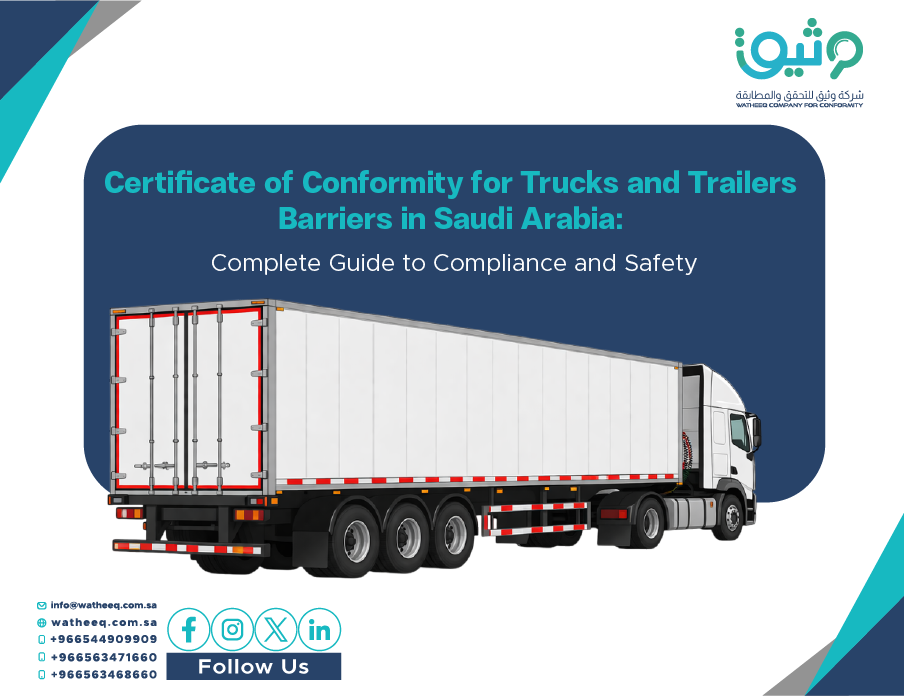
CoC for Trucks and Trailers Protective Barriers in Saudi Arabia: Complete Guide to Compliance and Safety

07 Apr 2026 Articles

CoC for Trucks and Trailers Protective Barriers in Saudi Arabia: Complete Guide to Compliance and Safety

Certificate of Conformity for Truck and Trailer Protective Barriers in Saudi Arabia is a mandatory requirement to ensure that protective safety devices installed on heavy vehicles meet strict regulatory standards. In the Kingdom, road safety is a national priority, especially for heavy-duty vehicles such as trucks, trailers, and semi-trailers.

One of the most critical safety requirements is the installation of protective barriers, also known as under-run protection devices. These include front, rear, and side barriers designed to prevent smaller vehicles from sliding underneath heavy vehicles during collisions, significantly reducing the risk of severe injuries and fatalities.

To ensure compliance, manufacturers, importers, and suppliers must obtain a Certificate of Conformity confirming that these barriers meet all applicable Saudi technical regulations before they can be sold, installed, or used.
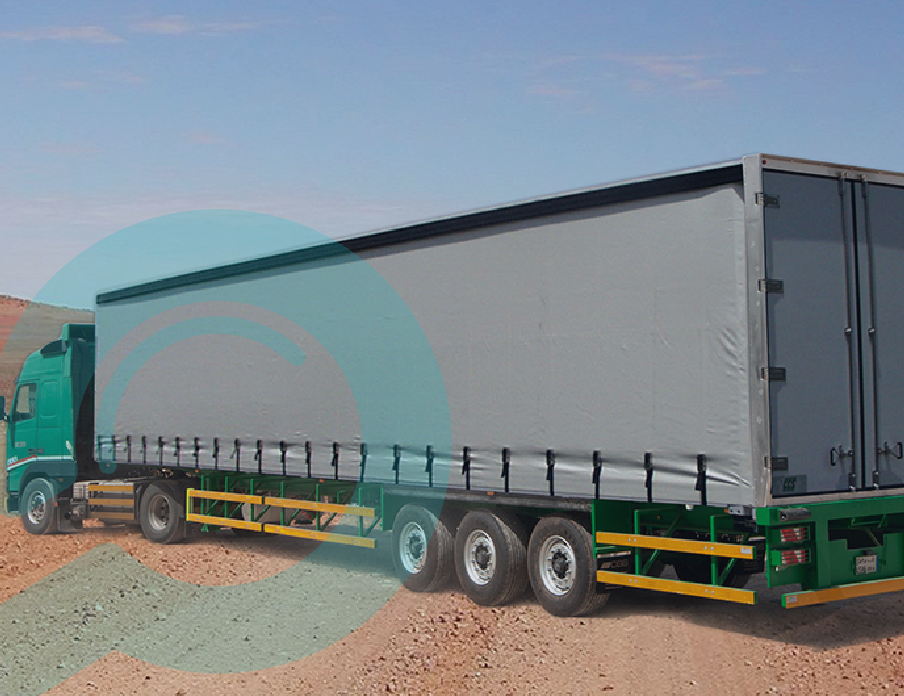

What Is the Certificate of Conformity for Truck and Trailer Protective Barriers?

The Certificate of Conformity is an official document that verifies that protective barrier devices comply with the Technical Regulation for Front, Rear, and Side Barriers for Trucks and Trailers and Semi-Trailers issued by the Saudi Standards, Metrology and Quality Organization.

It applies to:

  1. Front protective barriers
  2. Rear protective barriers
  3. Side protective barriers

for vehicles exceeding 3.5 tons gross vehicle weight.

Exemptions

This requirement does not apply to:

  1. Off-road vehicles
  2. Military vehicles
  3. Specialized vehicles where barrier installation is not feasible

Once issued, the certificate confirms that the barrier design is compliant, safe, and approved for use in Saudi Arabia.

Why the Certificate Is Mandatory

Saudi safety regulations strictly enforce barrier installation and compliance for heavy vehicles. Without a valid certificate:

  1. Vehicles cannot be licensed or registered
  2. Operation permits may be denied or revoked
  3. Authorities may reject non-compliant vehicles

This makes certification not just a regulatory formality, but a legal prerequisite for market entry and road operation.

Who Needs the Certificate?

The Certificate of Conformity is required for:

  1.  Manufacturers of barrier devices
  2.  Importers and suppliers entering the Saudi market
  3.  Brand owners responsible for compliance
  4.  Distributors and installers of protective systems

Regardless of origin, all barrier devices must comply before being introduced into the Saudi market.

Key Requirements for Obtaining the Certificate

To obtain certification, applicants must prepare a comprehensive technical file that demonstrates full compliance.

1. Compliance with Technical Regulation

The barrier must meet all structural, dimensional, and performance requirements defined by SASO.

2. Material Test Reports

  1. Test reports for steel or materials used
  2. Must be issued by laboratories accredited under ISO/IEC 17025

3. Product Installation Photos

  1. Clear images of installed barriers
  2. Must show correct positioning on vehicles

4. Manufacturing Equipment Details

  1. List of machinery and tools used
  2. Evidence of production capability and quality control

5. Technical Drawings

  1. Detailed engineering drawings
  2. Cross-sections and structural details

6. Manufacturing & Installation Process

  1. Documented procedures
  2. Step-by-step production and installation process

7. SASO Documentation

  1. Completed application forms
  2. Conformity declarations
  3. Technical data sheets

Certification Process Step-by-Step

The certification process typically follows these stages:

  1. Application submission
  2. Technical documentation review
  3. Factory audit (if required)
  4. Final compliance evaluation
  5. Certificate issuance

⏱️ Timeline: Approximately 10–15 working days (depending on documentation quality).

Why Compliance Matters for Your Business

Obtaining the Certificate of Conformity provides major operational and commercial advantages:

  1. Smooth vehicle registration and licensing
  2. Faster customs clearance for imported barriers
  3. Reduced regulatory risks and penalties
  4. Increased customer trust and market credibility
  5. Verified product safety and performance

Non-compliance can result in market rejection, financial losses, and legal consequences.

How Watheeq Company Supports Protective Barriers Certification

Watheeq Company provides complete support for obtaining the Certificate of Conformity, including:

  1. Technical document review
  2. Verification of test reports and standards
  3. Support in preparing drawings and compliance files
  4. Coordination of certification process
  5. Guidance until final approval

Our expertise ensures a smooth, efficient, and compliant certification journey.

Key Takeaways

  1. Barrier certification is mandatory for trucks and trailers above 3.5 tons
  2. Applies to front, rear, and side under-run protection devices
  3. Requires testing, technical documentation, and compliance verification
  4. Essential for vehicle licensing and legal operation in Saudi Arabia

Conclusion

The Certificate of Conformity for truck and trailer protective barriers is a critical requirement for ensuring road safety and regulatory compliance in Saudi Arabia. By verifying that protective devices meet strict technical standards, this certification protects lives, enhances vehicle safety, and ensures legal market access. Manufacturers and importers must prepare comprehensive documentation and meet all SASO requirements to avoid delays and rejection. Partnering with an experienced conformity expert like Watheeq simplifies the process and ensures successful certification with minimal risk.

Ready to Elevate Your Business?

Watheeq ensures your business meets the highest standards. Need certification, inspection, or guidance? We're here to help

Contact Us