Lifting Equipment Inspection in KSA: Third-Party & SABER Inspection Requirements Explained

02 Dec 2025 Articles

Lifting Equipment Inspection in KSA: Third-Party & SABER Inspection Requirements Explained

Lifting Equipment Inspection in KSA is a crucial requirement for all industries that rely on cranes, forklifts, hoists, and lifting accessories. Because lifting operations involve high-risk activities, the Saudi Standards, Metrology and Quality Organization (SASO) enforces strict inspection requirements to ensure safety, reliability, and full compliance with national technical standards.

Whether you are operating lifting equipment within Saudi Arabia or importing lifting machinery from abroad, two different inspection types are mandatory:

  1. Third-Party Inspection
  2. SABER Inspection

This guide explains both inspection types in detail and highlights how Watheeq Company can support you in completing all requirements efficiently and professionally.
1. Third-Party Lifting Equipment Inspection in KSA

What Is Third-Party Inspection?

Third-party inspection is an independent evaluation performed by an accredited inspection body. The purpose is to confirm that lifting equipment is:

  1. Safe for operation
  2. Structurally stable
  3. Free from mechanical or electrical defects
  4. In compliance with SASO and international safety standards
  5. Suitable for use at job sites

After a successful inspection, an official Inspection Report / Certificate is issued. This certificate is mandatory before any lifting equipment can be used for operations within Saudi Arabia.

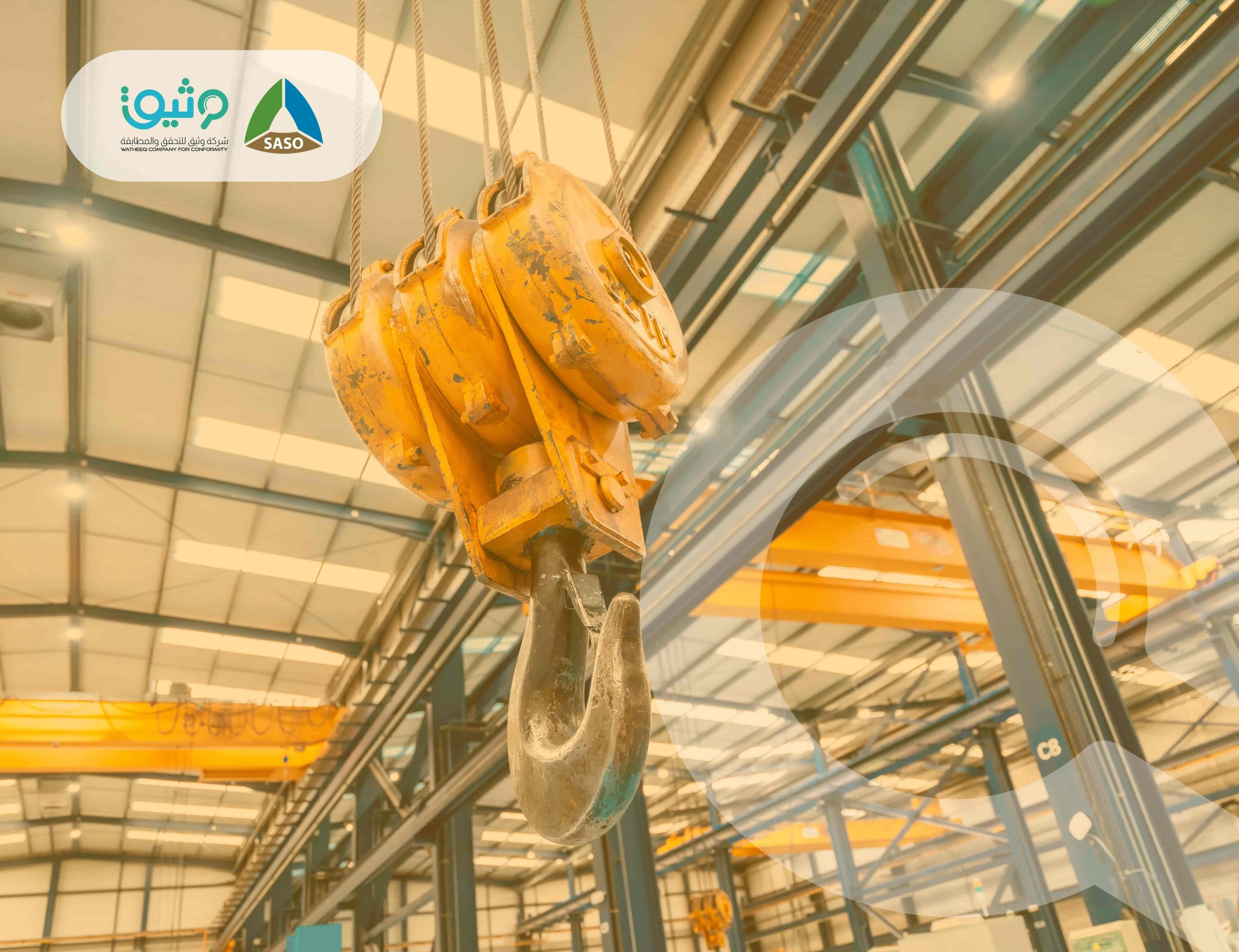
Lifting Equipment That Requires Third-Party Inspection

  1. Mobile cranes
  2. Tower cranes
  3. Gantry & overhead cranes
  4. Forklifts and telehandlers
  5. Hoists and chain blocks
  6. Winches
  7. Shackles, slings, hooks, and lifting accessories

Any equipment capable of lifting or handling loads must be inspected and certified to ensure safe operation.

Why Third-Party Inspection Is Important

Third-party inspection plays a critical role in workplace safety. It ensures:

  1. Full safety compliance
  2. Reduced accident and equipment failure risks
  3. Alignment with contractor, governmental, and industrial site requirements
  4. Improved operational reliability
  5. Compliance with both SASO and international safety standards

Most major projects in Saudi Arabia — including construction, oil & gas, factories, and logistics hubs — require valid third-party inspection certificates before equipment is allowed onsite.

2. SABER Inspection for Imported Lifting Equipment

What Is SABER Inspection?

When importing lifting equipment into Saudi Arabia, SASO requires an inspection report to be uploaded into the SABER platform. SABER Inspection verifies that imported machinery meets safety and compliance standards before customs release or market entry.

SABER Inspection applies in two main cases:

Case 1: Importing Lifting Equipment for Personal / Internal Use

If an importer brings lifting equipment for their own company use (not for resale), SASO requires:

  1. A valid inspection report issued by an accredited inspection body
  2. Uploading this report in SABER to issue the Shipment Certificate

Without the report, customs will not release the equipment.

Case 2: Importing Lifting Equipment for Sale in Saudi Arabia

If lifting equipment is imported for commercial sale, the importer must:

  1. Obtain an inspection report from an accredited inspection body
  2. Submit the report to Certification Bodies (CBs) along with other documents
  3. Complete the Certificate of Conformity (CoC) through SABER

In this case, the inspection report is essential for market approval and legal sales inside Saudi Arabia.

Why SABER Inspection Is Mandatory

SABER Inspection ensures that imported lifting equipment is:

  1. Inspected by an accredited third party
  2. Safe for use in Saudi Arabia
  3. Fully compliant with SASO technical regulations
  4. Legally approved for entry into the market

Without completing the SABER Inspection, customs clearance cannot be granted, and the CoC process cannot be completed for resale equipment.

How Watheeq Company Supports Both Inspection Requirements

Watheeq Company provides complete inspection solutions for all lifting equipment, covering both operational and import requirements.

✔ Third-Party Inspection Services

  1. Structural integrity assessment
  2. Mechanical and electrical system checks
  3. Load testing
  4. Operational safety evaluation
  5. Issuing official inspection certificates

✔ SABER Inspection Services

  1. Performing the required inspection for imported lifting equipment
  2. Preparing and verifying the inspection report
  3. Uploading documents inside SABER
  4. Supporting both personal-use and market-entry imports

With Watheeq, clients can complete both inspection types smoothly, quickly, and fully in line with SASO regulations.

Key Takeaways

  1. All lifting equipment in Saudi Arabia requires Third-Party Inspection before operational use.
  2. Imported lifting equipment for personal use must undergo SABER Inspection.
  3. Imported lifting equipment for resale requires an inspection report to complete the CoC.
  4. Customs will not release lifting equipment without SABER Inspection.
  5. Watheeq Company provides both Third-Party Inspection and SABER Inspection for full compliance.

Conclusion

Lifting equipment plays a vital role in industrial, construction, and logistics operations, but these machines carry inherent risks. Ensuring proper inspection — both operational and import-related — is essential for safety, reliability, and regulatory compliance.
By partnering with Watheeq Company, businesses can meet all third-party and SABER inspection requirements efficiently and confidently, ensuring their lifting equipment is safe, certified, and ready for use in Saudi Arabia.

Ready to Elevate Your Business?

Watheeq ensures your business meets the highest standards. Need certification, inspection, or guidance? We're here to help

Contact Us