Escalator Inspection in Saudi Arabia: Ensuring Safety Before and During Operation

31 Aug 2026 Articles

Escalator Inspection in Saudi Arabia: Ensuring Safety Before and During Operation

Escalator Inspection in Saudi Arabia plays an important role in ensuring the safe operation of escalators and moving walkways installed in shopping malls, airports, hotels, hospitals, metro stations, commercial buildings, and other high-traffic facilities.

These systems transport large numbers of people every day and contain interconnected mechanical, electrical, braking, control, and safety components. A defect or failure in a critical component can therefore create significant risks for passengers, maintenance personnel, and facility operators.

In Saudi Arabia, escalators and moving walkways are subject to the applicable requirements of the SASO Technical Regulation for Escalators and Moving Walkways. The regulation requires inspection before equipment is put into service, after major modifications, and at regular intervals.

At Watheeq Company for Conformity, we provide professional inspection services for escalators and moving walkways, supporting clients in evaluating equipment condition, verifying critical safety functions, and meeting applicable inspection requirements.

Why Is Escalator Inspection in Saudi Arabia Important?

Escalators and moving walkways operate continuously in many public and commercial facilities. Their safe operation depends on numerous mechanical, electrical, and safety systems functioning correctly together.

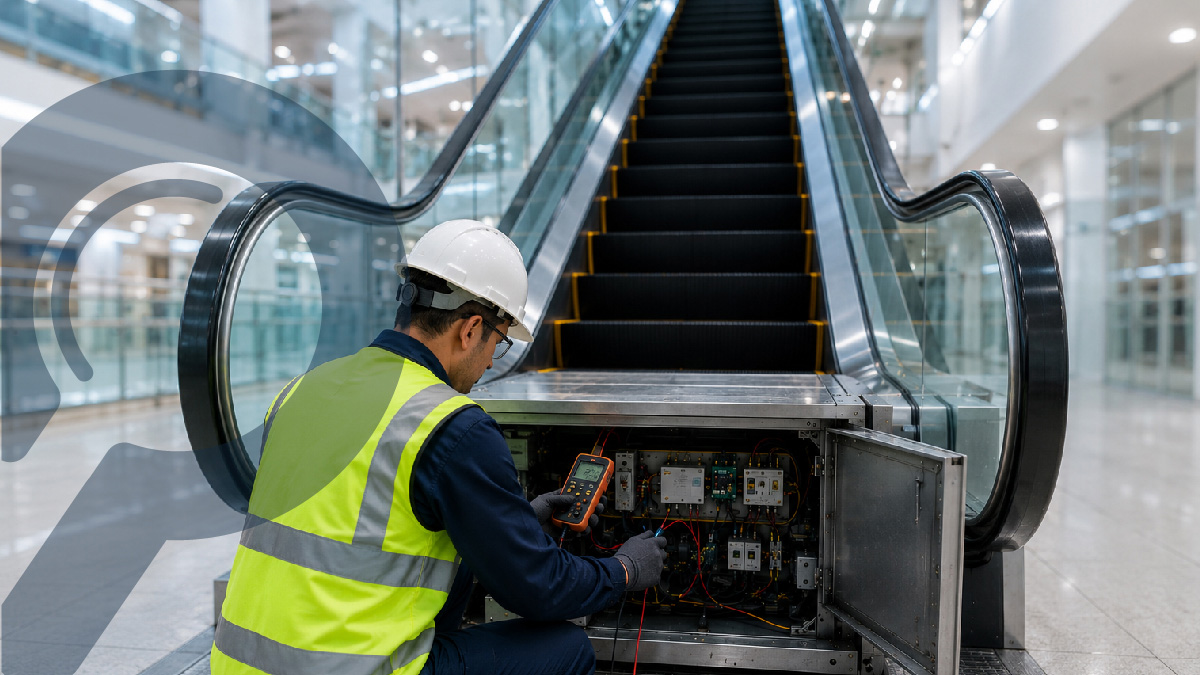
An Escalator Safety Inspection helps identify defects, deterioration, abnormal conditions, and potential safety concerns before they develop into more serious operational problems.

Inspection can help facility owners and operators:

  1. Verify the safety condition of the equipment.
  2. Identify visible defects and deterioration.
  3. Verify the operation of critical safety systems.
  4. Reduce the risk of equipment-related incidents.
  5. Support compliance with applicable inspection requirements.
  6. Maintain confidence in the safe operation of escalators and moving walkways.

Inspection is therefore not simply a documentation requirement; it is an important part of managing equipment safety throughout its operational life.

When Is Escalator and Moving Walkway Inspection Required?

According to the SASO Technical Regulation for Escalators and Moving Walkways, equipment is required to undergo inspection at important stages of its lifecycle.

These include:

Before Being Put Into Service

Inspection should be completed before an escalator or moving walkway is placed into operation. This provides an opportunity to verify the condition and safety functions of the installed equipment before passengers begin using it.

After Major Modifications

A new inspection is required when major modifications are made that could affect safe operation.

The SASO regulation identifies major modifications as including changes involving areas such as location, speed, electrical safety devices, braking systems, drive systems, control units, trusses, or balustrades.

At Regular Intervals

Periodic Escalator Inspection is important throughout the operational life of the equipment. Regular inspections provide an independent evaluation of whether important components and safety systems continue to function correctly.

This approach helps identify developing safety concerns that may not be immediately apparent during normal daily operation.

What Does an Escalator Inspection Include?

The scope of an inspection depends on the equipment, its condition, the type of inspection, and applicable requirements.

The SASO Technical Regulation identifies several elements as part of a constructional inspection or examination.

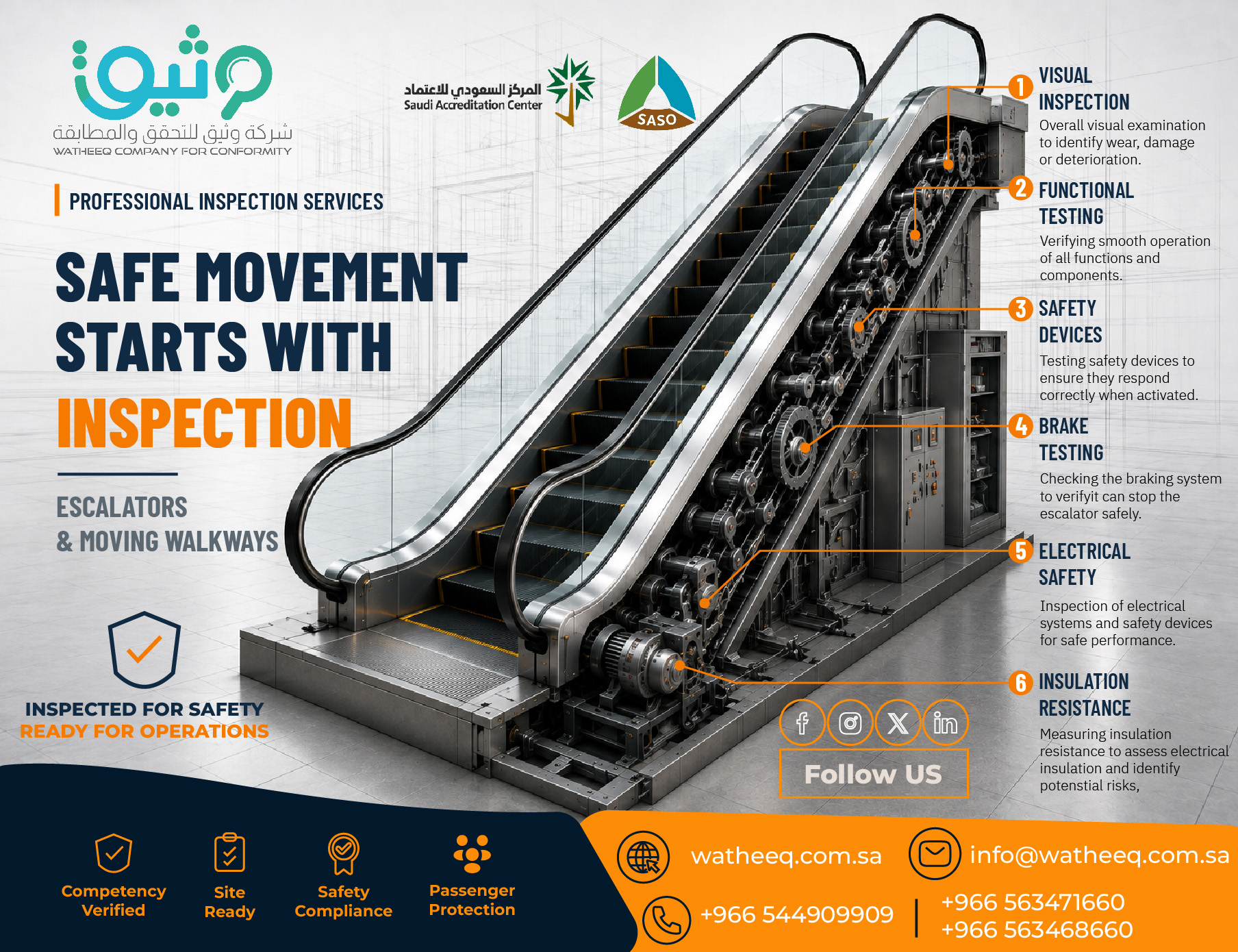
1. Overall Visual Inspection

The inspection begins with an examination of the general condition of the escalator or moving walkway.

The inspector evaluates visible components, structures, safety features, and signs of damage, deterioration, wear, or other conditions that could affect safe operation.

A visual inspection can provide important information about the physical condition of the equipment and help identify areas requiring further examination.

2. Functional Testing

Functional testing is carried out to verify that the escalator or moving walkway operates correctly and that relevant systems respond as intended.

This allows the inspector to evaluate the operation of the equipment rather than relying solely on its visual condition.

3. Testing of Electrical Safety Devices

Electrical safety devices are critical to the safe operation of escalators and moving walkways.

During inspection, relevant electrical safety devices are tested to verify their effective operation and confirm that required safety functions respond correctly when activated.

4. Brake Test

The braking system is one of the most important safety systems in an escalator or moving walkway.

A brake test helps verify that the braking system functions effectively and that the equipment can be stopped safely when required.

5. Measurement of Insulation Resistance

The insulation resistance of electrical circuits is measured as part of evaluating the electrical condition of the equipment.

This measurement can help identify deterioration or deficiencies in electrical insulation that could present electrical safety risks.

These five inspection elements correspond directly to those specified by SASO for constructional inspection or examination.

What Are the SASO Escalator Requirements?

The SASO Escalator Requirements are established through the Technical Regulation for Escalators and Moving Walkways, which addresses safety and regulatory requirements applicable to this equipment in Saudi Arabia. SASO’s official technical-regulations directory lists the regulation, which was adopted on 31 March 2022.

In addition to inspection requirements, the regulation addresses areas related to safety, installation, operation, instructions, warning signs, modifications, and other requirements applicable to escalators and moving walkways.

For owners, contractors, installers, and facility managers, understanding the applicable requirements before putting equipment into service can help prevent delays and identify compliance issues at an earlier stage.

Escalator Inspection Certificate and Equipment Readiness

Following the applicable inspection process, inspection documentation provides evidence of the equipment’s evaluated condition and the results of the inspection.

An Escalator Inspection Certificate, where applicable to the relevant inspection and regulatory process, helps facility owners and responsible parties demonstrate that the equipment has undergone the required inspection before operation or as part of periodic safety verification.

It is important, however, to understand that an inspection certificate does not replace the owner’s responsibility for proper maintenance, servicing, and ongoing monitoring of the equipment.

Periodic Escalator Inspection and Ongoing Safety

The condition of an escalator can change throughout its operational life due to continuous use, component wear, environmental conditions, maintenance activities, and modifications.

For this reason, inspection should not be treated as a one-time activity.

Periodic Escalator Inspection, combined with proper preventive maintenance, helps identify developing defects and provides an independent evaluation of important safety systems and components.

Maintenance and inspection also serve different purposes. Maintenance focuses on keeping the equipment operational and addressing servicing needs, while independent inspection evaluates the equipment against the applicable inspection and safety requirements.

A well-managed facility should therefore integrate both activities into its overall equipment safety program.

International Safety Standards for Escalators and Moving Walkways

Escalator and moving-walk safety is also addressed internationally. ISO 8103-1:2024 establishes safety requirements for new escalators and moving walks and addresses significant hazards and hazardous situations associated with their intended use and reasonably foreseeable misuse.

This demonstrates the importance placed internationally on systematic safety requirements for equipment that transports passengers in public and commercial environments.

Who Needs Escalator and Moving Walkway Inspection?

Professional inspection services may be relevant to organizations responsible for escalators and moving walkways in locations such as:

  1. Shopping malls and retail centers
  2. Airports
  3. Metro and transportation stations
  4. Hotels
  5. Hospitals
  6. Commercial buildings
  7. Public facilities
  8. Mixed-use developments
  9. Large residential and business complexes
  10. Other facilities using escalators or moving walkways

Building owners, facility managers, contractors, developers, and equipment operators should consider inspection requirements throughout the equipment lifecycle rather than waiting until a problem occurs.

Why Choose Watheeq for Escalator Inspection in Saudi Arabia?

Watheeq Company for Conformity provides professional inspection services for escalators and moving walkways, supporting clients in evaluating equipment safety and meeting applicable inspection requirements.

Our inspection services help clients:

  1. Verify equipment condition before operation.
  2. Evaluate critical safety components and systems.
  3. Identify potential defects and safety concerns.
  4. Support applicable inspection requirements.
  5. Assess equipment following major modifications.
  6. Support periodic safety inspections.
  7. Improve confidence in equipment operation.

Whether the equipment is newly installed, has undergone a significant modification, or requires periodic inspection, Watheeq supports clients through a structured and professional inspection process.

Ensure Your Escalators and Moving Walkways Are Ready for Safe Operation

Do not wait until an equipment problem causes operational disruption or creates a safety concern. If you are installing a new escalator or moving walkway, completing a major modification, or managing existing equipment, Watheeq Company for Conformity can support you with professional inspection services.

Contact Watheeq today to arrange an escalator or moving walkway inspection and help ensure your equipment is safe, compliant, and ready for operation.

Conclusion

Escalator Inspection in Saudi Arabia is essential for maintaining the safety and reliable operation of escalators and moving walkways throughout their lifecycle. By conducting inspections before operation, after major modifications, and at required intervals, facility owners and operators can identify safety concerns, verify critical systems, support regulatory compliance, and provide a safer environment for passengers and personnel.

Ready to Elevate Your Business?

Watheeq ensures your business meets the highest standards. Need certification, inspection, or guidance? We're here to help

Contact Us