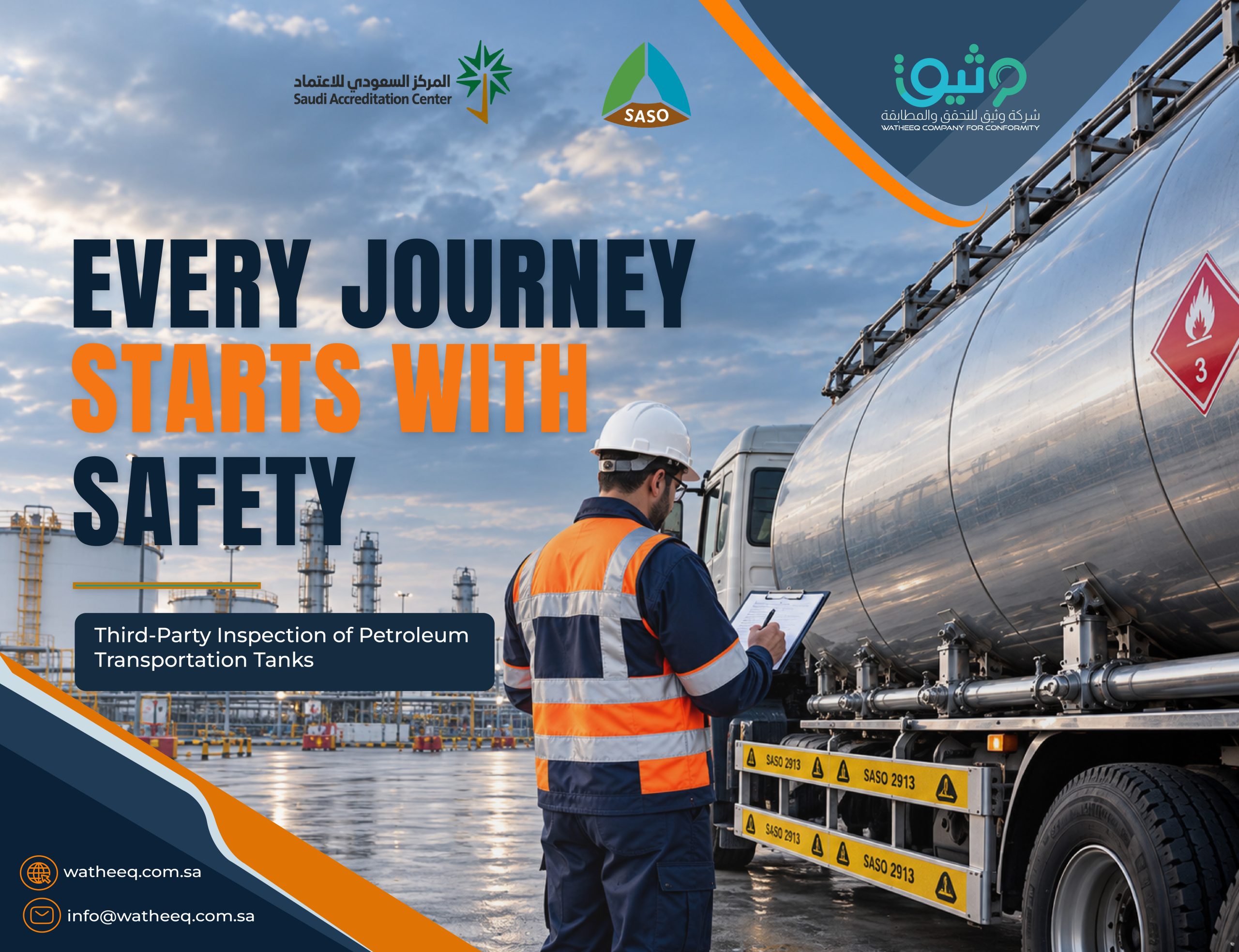
Third-Party Inspection of Petroleum Products Transportation Tanks in Saudi Arabia

04 Nov 2026 Articles

Third-Party Inspection of Petroleum Products Transportation Tanks in Saudi Arabia

The safe transportation of petroleum products is essential to Saudi Arabia’s oil and gas, logistics, and industrial sectors. Tankers used to transport diesel, gasoline, and other petroleum products must be maintained in suitable condition to help prevent leaks, protect the environment, and ensure safe transportation operations.

Petroleum Transportation Tank Inspection plays an important role in verifying the condition, safety, and operational suitability of tanker vehicles. For companies operating in Saudi Arabia, arranging an independent third-party inspection helps demonstrate compliance with applicable requirements and supports the safe operation of petroleum transportation fleets.

At Watheeq Company for Conformity, we provide third-party inspection services for petroleum products transportation tanks, helping fleet operators and businesses assess the condition of their tankers and identify potential safety concerns.

Why Is Petroleum Transportation Tank Inspection Important?

Petroleum transportation tanks operate under demanding conditions and carry products that may present significant fire, environmental, and operational risks. Defects in tank structures, valves, connections, or other critical components can lead to leakage, product loss, and hazardous incidents.In Saudi Arabia, petroleum transportation operators should also consider applicable safety and transportation requirements issued by the Transport General Authority (TGA).

A third-party inspection provides an independent assessment of the tanker’s condition and helps identify defects that may require corrective action before the vehicle continues operating.

Regular petroleum tanker inspection can help companies:

  1. Identify visible damage, corrosion, and structural deterioration.
  2. Detect potential leakage risks.
  3. Evaluate the condition of critical tank components.
  4. Improve transportation safety and operational reliability.
  5. Reduce the risk of unexpected operational interruptions.
  6. Support applicable regulatory and customer requirements.
  7. Maintain documented inspection records for fleet management.

What Does a Petroleum Transportation Tank Inspection Cover?

The inspection scope depends on the tanker’s design, intended use, applicable requirements, and agreed inspection criteria. A typical third-party inspection may include the following elements.

1. Visual Inspection of the Tank

The tank’s external surfaces are examined for visible damage, corrosion, deformation, and other conditions that could affect its integrity.

Structural elements, supports, mounting arrangements, and accessible components are also checked where applicable. The purpose is to identify visible defects that may affect the tank’s safe operation.

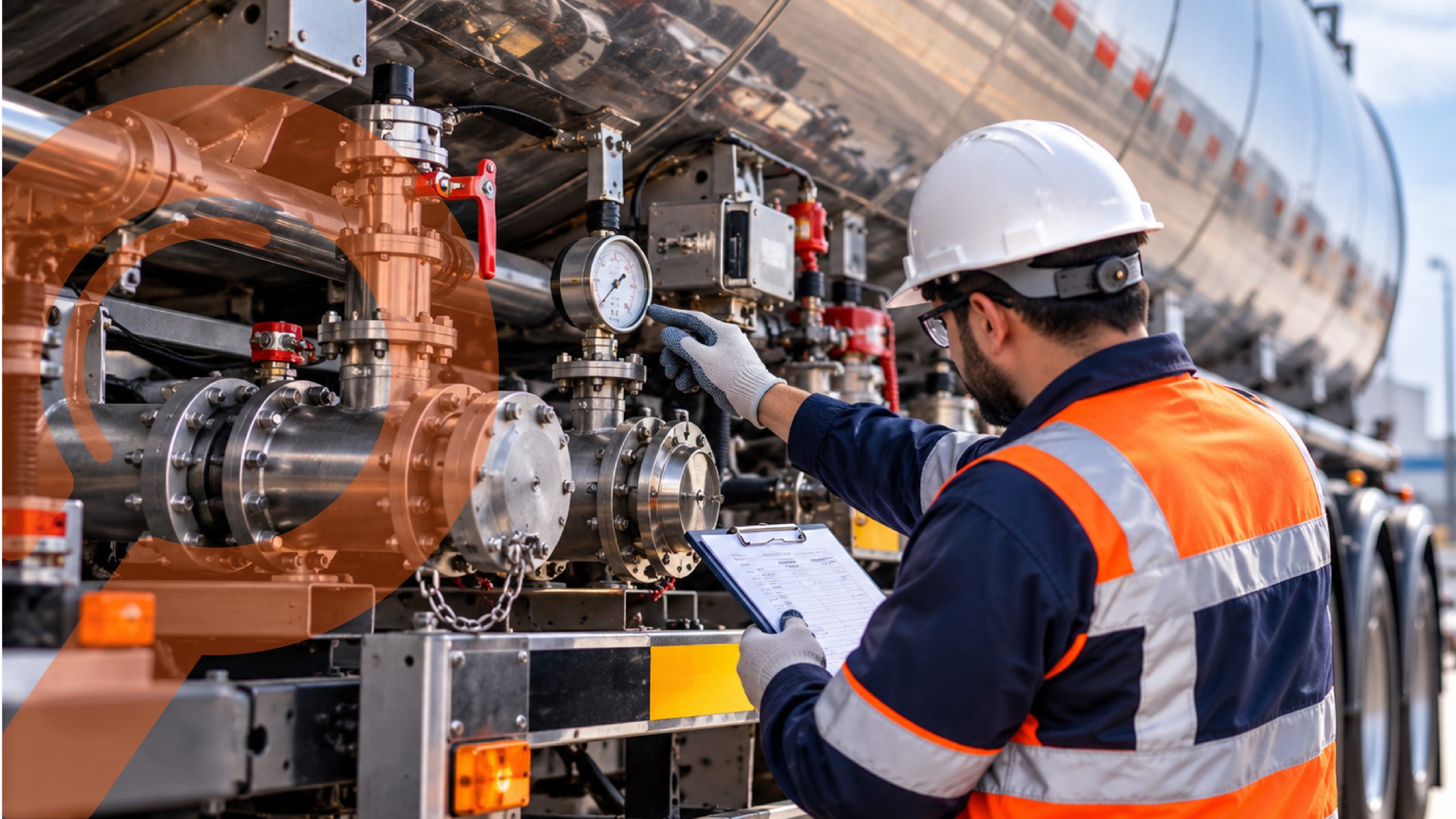
2. Inspection of Valves, Piping, and Connections

Valves, discharge connections, piping, closures, fittings, and other accessible components are examined for visible defects, damage, deterioration, or signs of leakage.

These components are essential for controlling petroleum product transfer and helping prevent accidental spills during loading, transportation, and unloading operations.

3. Inspection of Safety Equipment

Relevant safety equipment and protective features are checked to assess their condition and suitability for the intended operation.

Depending on the tanker configuration and applicable inspection criteria, the scope may include emergency-related components, protective devices, and other safety features.

4. Tank Identification and Documentation Verification

Inspectors verify the tanker’s identification details, serial numbers, nameplates, and relevant technical documentation.

Proper identification and documentation help ensure that inspection findings can be accurately linked to the equipment and maintained for future reference.

5. Additional Examination and Testing When Required

Where specified by applicable requirements or the agreed inspection scope, additional examinations or tests may be necessary to evaluate the tank’s condition.

The appropriate testing method must be determined based on the tank design, service conditions, applicable standards, and relevant safety requirements.

Common Safety Concerns Identified During Petroleum Tanker Inspections

Petroleum transportation tanks may develop defects or operational concerns over time due to continuous use, environmental exposure, vibration, and general wear.

Potential inspection findings may include:

  1. External corrosion or deterioration of tank surfaces.
  2. Visible deformation or damage to tank components.
  3. Damaged or deteriorated valves and fittings.
  4. Signs of leakage around connections or closures.
  5. Defective or inadequately maintained safety components.
  6. Missing, damaged, or unclear identification markings.
  7. Incomplete or inconsistent technical documentation.

Identifying these concerns through a structured inspection process helps fleet operators determine appropriate corrective actions and maintenance priorities.

Supporting Petroleum Transportation Companies Across Saudi Arabia

Saudi Arabia has an extensive petroleum transportation and logistics sector serving industrial facilities, fuel distribution networks, and commercial customers.

Maintaining tanker fleets in suitable operating condition is essential for businesses that depend on reliable and safe petroleum product delivery.

Third-party petroleum transportation tank inspection services can support:

  1. Petroleum product transportation companies.
  2. Fuel distribution and logistics operators.
  3. Fleet owners and transportation contractors.
  4. Industrial facilities operating petroleum tankers.
  5. Petroleum distributors and commercial fuel suppliers.
  6. Businesses responsible for tanker fleet maintenance and safety.

Planning inspections in advance can also help companies coordinate maintenance activities, minimize avoidable downtime, and maintain better control over fleet readiness.

Benefits of Independent Third-Party Tanker Inspection

An independent third-party inspection provides an objective assessment of the inspected equipment against defined inspection criteria.

For petroleum transportation businesses, the benefits may include:

Improved Safety Awareness

Inspection findings help identify visible defects and potential safety concerns that require attention.

Better Maintenance Planning

Documented observations support maintenance teams in prioritizing repairs and corrective actions.

Operational Reliability

Regular condition assessments can help reduce avoidable interruptions associated with equipment deterioration.

Documented Inspection Evidence

Inspection reports provide records of the equipment’s condition at the time of inspection and the findings identified.

Support for Applicable Requirements

Third-party inspection can help organizations demonstrate that their equipment has been assessed against the applicable inspection criteria, where such inspection is required or accepted.

Why Choose Watheeq for Petroleum Transportation Tank Inspection?

Watheeq Company for Conformity supports businesses with professional third-party inspection services for petroleum products transportation tanks in Saudi Arabia.

Our inspection services are designed to help clients:

  1. Assess tanker condition and operational suitability.
  2. Identify visible defects and potential safety concerns.
  3. Support compliance with applicable inspection requirements.
  4. Maintain documented inspection records for fleet management.
  5. Improve confidence in petroleum transportation operations.
  6. Support maintenance planning and corrective action activities.

Inspection scope, acceptance criteria, testing requirements, and reporting arrangements depend on the applicable requirements and the specific service agreed upon.

Conclusion

Third-party petroleum transportation tank inspection is an important part of maintaining safety, reliability, and operational readiness across petroleum transportation fleets in Saudi Arabia. Identifying potential defects and documenting equipment condition can help businesses reduce operational risks and improve maintenance planning. Watheeq Company for Conformity provides independent inspection services to support petroleum transportation businesses in assessing tanker condition and maintaining safer transportation operations.

Ready to Elevate Your Business?

Watheeq ensures your business meets the highest standards. Need certification, inspection, or guidance? We're here to help

Contact Us